
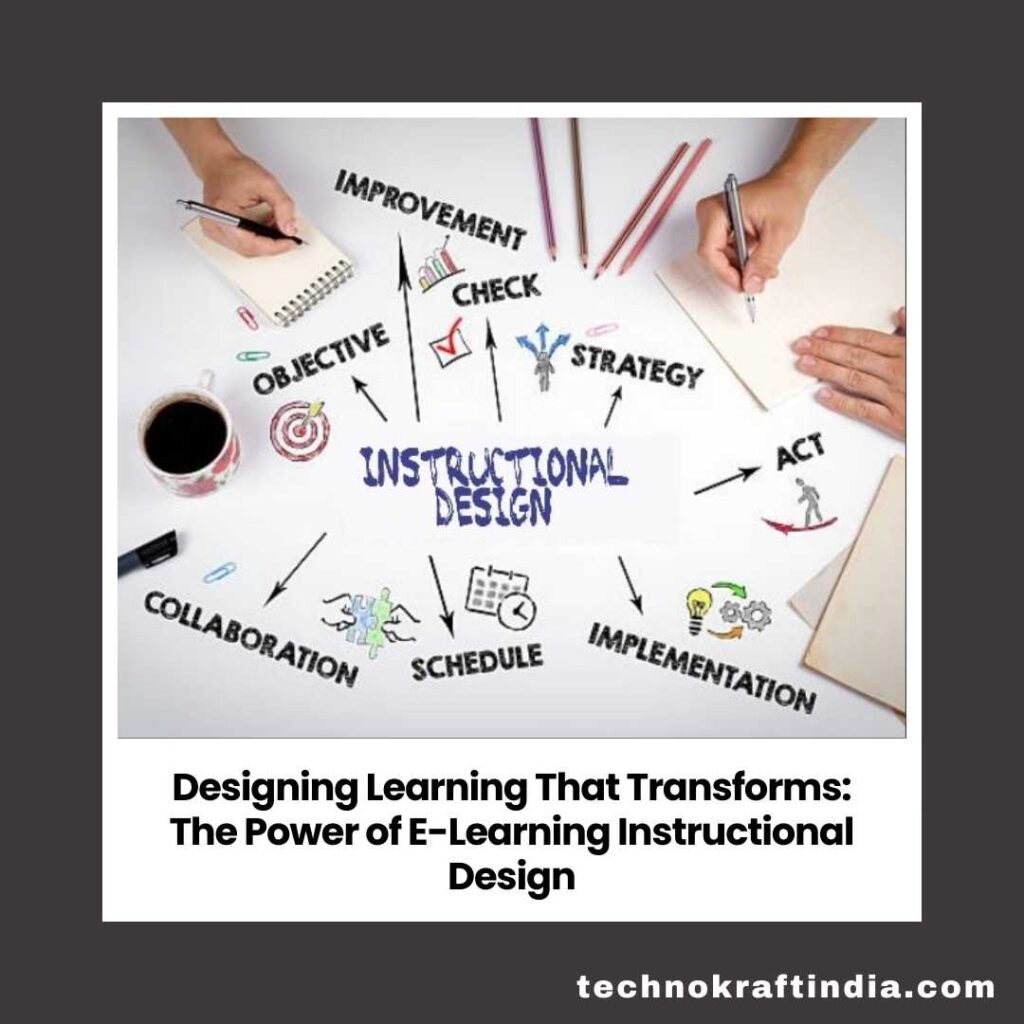
Designing Learning That Transforms: The Power of E-Learning Instructional Design
Designing Learning That Transforms: The Power of E-Learning Instructional Design
E-learning has rapidly become a driving force behind modern education, professional development, and corporate training. Yet, the real impact of digital learning depends on how well the content is crafted. This is where E-learning instructional design shapes meaningful learning experiences. When used effectively, it turns complex concepts into simple, memorable, and interactive journeys. As organizations look for scalable learning solutions, the demand for smart instructional design grows even faster. The following guide explores how strong design principles elevate digital courses and boost learner performance across industries.
1. Understanding the Core of E-Learning Instructional Design
E-learning instructional design focuses on creating structured learning paths that help learners achieve clear outcomes. Designers study how people absorb information, what motivates them, and which formats support long-term retention. Every lesson involves planning, storyboarding, scripting, testing, and refining.
A good design approach always begins with understanding learners. Their age, education, skill level, preferences, and learning goals shape the structure of the content. When designers study these factors early, the course becomes relevant and engaging. The goal is not just to teach but to help learners connect ideas with real-world situations. Effective design encourages curiosity, improves comprehension, and motivates continued progress.
Another core part of e-learning instructional design includes selecting formats that best present information. Designers choose between videos, slides, animations, audio clips, simulations, quizzes, and scenario-based tasks. Each element supports a unique learning style. Because every learner is different, variety plays an important role. As content becomes more immersive, learners find it easier to stay focused and perform better.
The foundation of successful design always depends on clarity. When concepts are divided into smaller sections, learners move forward with confidence. This structure helps them understand, practice, and apply ideas without feeling overwhelmed.
2. Crafting Engaging Learning Experiences That Inspire Action
Engagement is at the heart of e-learning instructional design. A well-designed course not only captures attention but also makes the journey enjoyable. Interactive elements, relatable visuals, and problem-based learning encourage deeper understanding. When learners see the relevance of each topic, they feel motivated to continue.
Designers often use storytelling to make complex content simple. A story creates context. When learners relate to a situation or character, they stay involved. A real-life scenario brings the subject alive and supports emotional connection. This method works well across professional training, academic programs, and behavior-change courses.
Microlearning is another powerful strategy. It breaks content into short, digestible lessons. Learners gain clarity and learn at their own pace without pressure. Videos, infographics, flashcards, and short quizzes support this format. Because the brain processes small chunks faster, retention improves naturally.
Gamification adds energy to the learning journey. Rewards, badges, points, and challenges create a sense of achievement. With these elements, learners become active participants instead of passive viewers. The more they engage, the better they remember.
Feedback is a strong motivator as well. When learners receive instant guidance, they understand where they stand. It helps them correct mistakes and refine their skills. Strong instructional design includes checkpoints throughout the course, making the learning path progressive and clear.
3. Choosing the Right Tools and Technologies for Better Outcomes
Technology strengthens the impact of e-learning instructional design. Learning Management Systems (LMS), authoring tools, and multimedia platforms help designers create structured and interactive courses. The right tools ensure smooth delivery and high-quality learner experiences.
Authoring tools like Articulate Storyline, Adobe Captivate, and Rise 360 offer templates, animations, assessments, and responsive layouts. These platforms help create courses faster without compromising quality. Designers can build quizzes, branching scenarios, simulations, and drag-and-drop interactions with ease.
LMS platforms provide a central place for hosting, tracking, and analyzing learning progress. Organizations access data such as completion rates, quiz scores, and learner behavior. This data helps improve future content. When designers understand how learners interact with a course, they can refine the next version with precision.
Multimedia tools enhance creativity. High-quality videos, voice-overs, illustrations, and animations simplify learning. When visual elements support the text, understanding increases. Clear graphics guide learners through steps and processes that are hard to explain using simple words.
Mobile-friendly design is another key requirement. Learners often access courses from phones or tablets. Responsive layouts adjust to screen sizes and ensure smooth navigation. Because modern learners want flexibility, mobile compatibility becomes essential to overall success.
4. Designing Assessments That Strengthen Knowledge and Skills
Assessment is a major part of e-learning instructional design. It allows learners to verify their understanding and helps organizations measure impact. When assessments align with learning goals, the course becomes stronger and more effective.
Multiple-choice questions, drag-and-drop exercises, and scenario-based assessments evaluate different skills. They offer a good mix of knowledge testing and practical challenge. Problem-solving exercises show whether learners can apply concepts in real situations. This is important in corporate training, professional certification, and compliance programs.
Assessments must support learning rather than just measure performance. When learners receive clear explanations for correct and incorrect answers, they gain confidence. This feedback helps them understand the “why” behind each concept. Because learning is a continuous process, timely guidance builds mastery.
Another important practice is integrating assessments throughout the course. Short quizzes after each section help learners recall information. They also help designers see which areas need improvement. When assessments are embedded within the flow, learners remain active and engaged.
Practical tasks such as simulations and case-study activities add depth. They encourage learners to think critically and solve challenges. When learners connect theory with practice, they build stronger skills and long-term memory.
5. Improving Course Quality Through Evaluation and Continuous Optimization
Quality assurance plays a key role in e-learning instructional design. After a course is created, it must be tested for clarity, accuracy, and usability. The goal is to deliver smooth learning experiences without distractions or confusion.
Pilot testing provides valuable insights. When a small group of learners tries the course, their feedback highlights issues related to navigation, content flow, and engagement. Designers study this input and adjust the course accordingly. This ensures the final version is polished and effective.
Tracking analytics is another important practice. Completion rates, time spent on modules, and quiz scores show how learners behave. These data points help identify strengths and weaknesses. When designers use this information wisely, they create improved learning paths.
Accessibility also matters. Courses should be inclusive and usable for everyone. Adding transcripts, alt text, readable fonts, and clear navigation supports diverse learners. Simple design increases comfort and helps users focus on the content.
Continuous improvement ensures long-term success. As trends evolve, courses must stay aligned with modern standards. Regular updates keep content fresh, accurate, and relevant. When organizations invest in ongoing optimization, they achieve stronger outcomes and higher learner satisfaction.
Conclusion
E-learning instructional design shapes the quality of digital education and workplace training. A strong approach blends creativity, psychology, and technology to create meaningful experiences. When content is structured well, learners stay motivated, understand concepts faster, and apply their knowledge effectively. As digital learning continues to rise, the value of powerful instructional design becomes even more important. Organizations that invest in smart design strategies build skilled teams, achieve higher performance, and stay ahead in a competitive world. Through thoughtful planning and continuous innovation, e-learning transforms from simple information into effective learning that truly creates impact.